
The golden delicious apple
There’s nothing quite so tasty, in my opinion, as a cold, ripe, crisp golden delicious apple in the bearing-down heat of the summer sun. I captured this one using Inkscape’s calligraphy tool.

There’s nothing quite so tasty, in my opinion, as a cold, ripe, crisp golden delicious apple in the bearing-down heat of the summer sun. I captured this one using Inkscape’s calligraphy tool.


This was an illustration I did of a speed gauge in Inkscape, the open source vector drawing application.

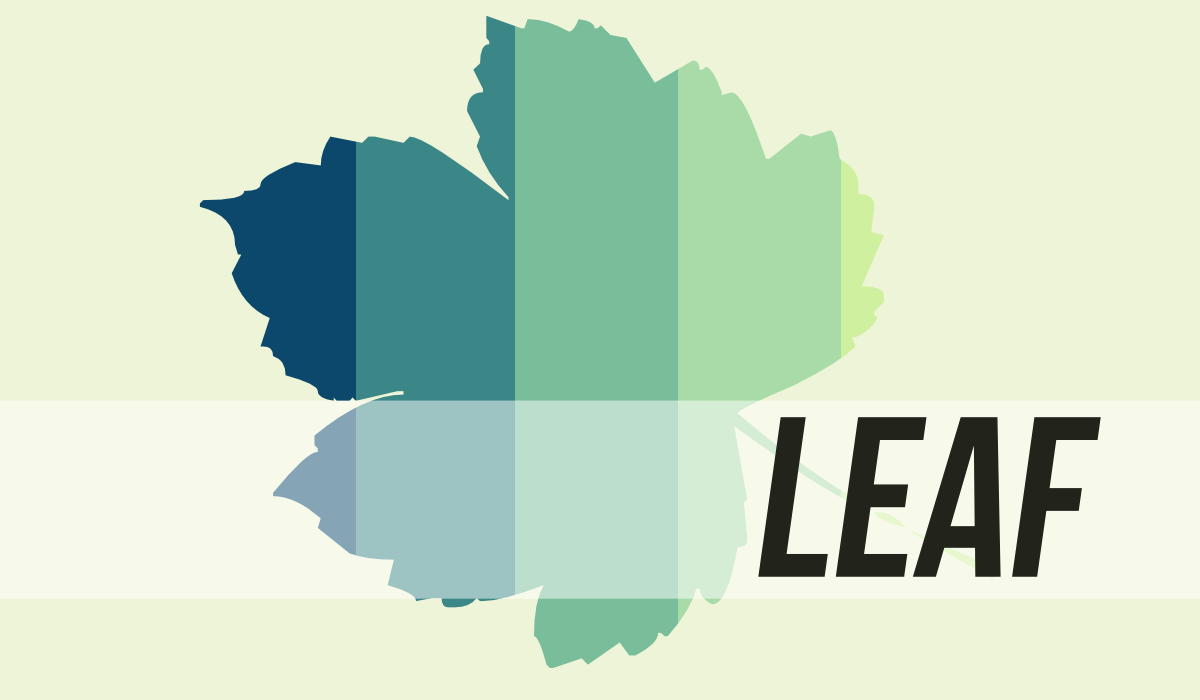
I saw a beautiful illustration on Pinterest that made use of clipping, and decided to play with the idea for myself. In Inkscape, if you import an image, like the palette in the illustration above, and make or import a shape, such as the leaf here, you can place the leaf shape on top of the palette image and apply object/clipping/set clip which results in the clipped image above. I added a rectangle in white, set transparency to 50%, and added the word leaf in one of my favorite fonts, Bebas Neue, and applied a skew.
It’s an interesting way to visually share two ideas in a single image. Both the palette and the leaf have their own visual message, and together they send an interesting combination of the two. I could have used a photograph instead to possibly make a statement about love or business or nature, or all three. Open up Inkscape and try this technique for yourself.
If you liked this post, please consider subscribing to this site by using the subscription form at the bottom of this page. Maybe Facebook is more your thing? Like our Facebook page at the bottom of this page. We’re also on Twitter, Google Plus, Pinterest, and other social networks listed at the top of this page. Please like, comment, and share if you found this post useful, interesting, or kind.


I am fascinated by serial linear illustrations that reveal form simply by altering the sequence of lines. It’s not a new idea, visually speaking, but one that I’ve seen executed beautifully many times and have tried to emulate several times. I once had an introductory graphic design class that challenged my feelings about whether I was capable of doing design because the assignments were often about how steady you could hold a pen, and I’ve never had an especially steady hand. One assignment in particular was an introduction to serial line as illustration in which we were to examine using repeated lines in order to show emotions. It was a glorified lesson in Gestalt principles, but Gestalt was never mentioned. At any rate, my solutions to the problem were hard to see because my work was marred by sloppy penwork, uneven lines, and a very specific expected aesthetic. I think that’s one of the reasons I adored the move to digital design. No longer did the steadiness of my hand or the cleanliness of my penwork get in the way of someone seeing what was in my head. I would have gladly presented the image above as an answer to the emotion of joyous, and likely would have been deemed successful.


I really love the truth in this quote by Oscar Wilde on the difference between living and existing: “To live is the rarest thing in the world. Most people exist, that is all”
I decided to create an illustration of the idea to underscore it.


In my search for my sense of nutrition and a healthy relationship to food, I learned many new philosophies, some of which I bristled at and found rather false, such as any that need subscription to a proprietary method of thinking, those that exclude types of food (think Atkins), and those that call certain kinds of nutrients evil, like “bad carbs”.
Other food philosophies I have reveled in and succeeded with are those that are mostly about natural, whole foods, hold a reasonable balance between realism and pragmatism, and are truly do-able in practice. Michael Pollan writes about his very sensible approach, an approach to food that I’ve mostly adopted as my own.
He writes many of the elements of his philosophy simply, in ways that make sense, and reinforced with scholarly data as well as experiential data. This one illustrated above, avoiding foods preserved to the point of not really having a shelf life, makes sense. Preservation often moves food from its natural rotting, decomposing state to one that benefits producers. in which food lasts nearly forever, so that it can be sold forever. It means less to the producers who use extreme shelf live preservation that they may alter, harm, or negatively impact the consumer. That long list of preservatives on the back of the package? You can probably do without those.
food, eating, nutrition, Pollan, food rules, lemasney, open source, Inkscape, design, illustration


 Illustration Source Congratulates Marie B. Cros whose Work Has Been Selected to be Published in American Illustration 32
